

The First Presented FVG: Why the Session’s First Gap Carries the Weight
No indicator is right for everyone — it depends on what you trade and what you already know how to read. But the ones worth keeping share a short list of properties, and the ones you uninstall tend to fail in the same four places. Here’s the checklist, category by category.

By SWEEPLOGIC
- July 31, 2026
- 7 Min Read
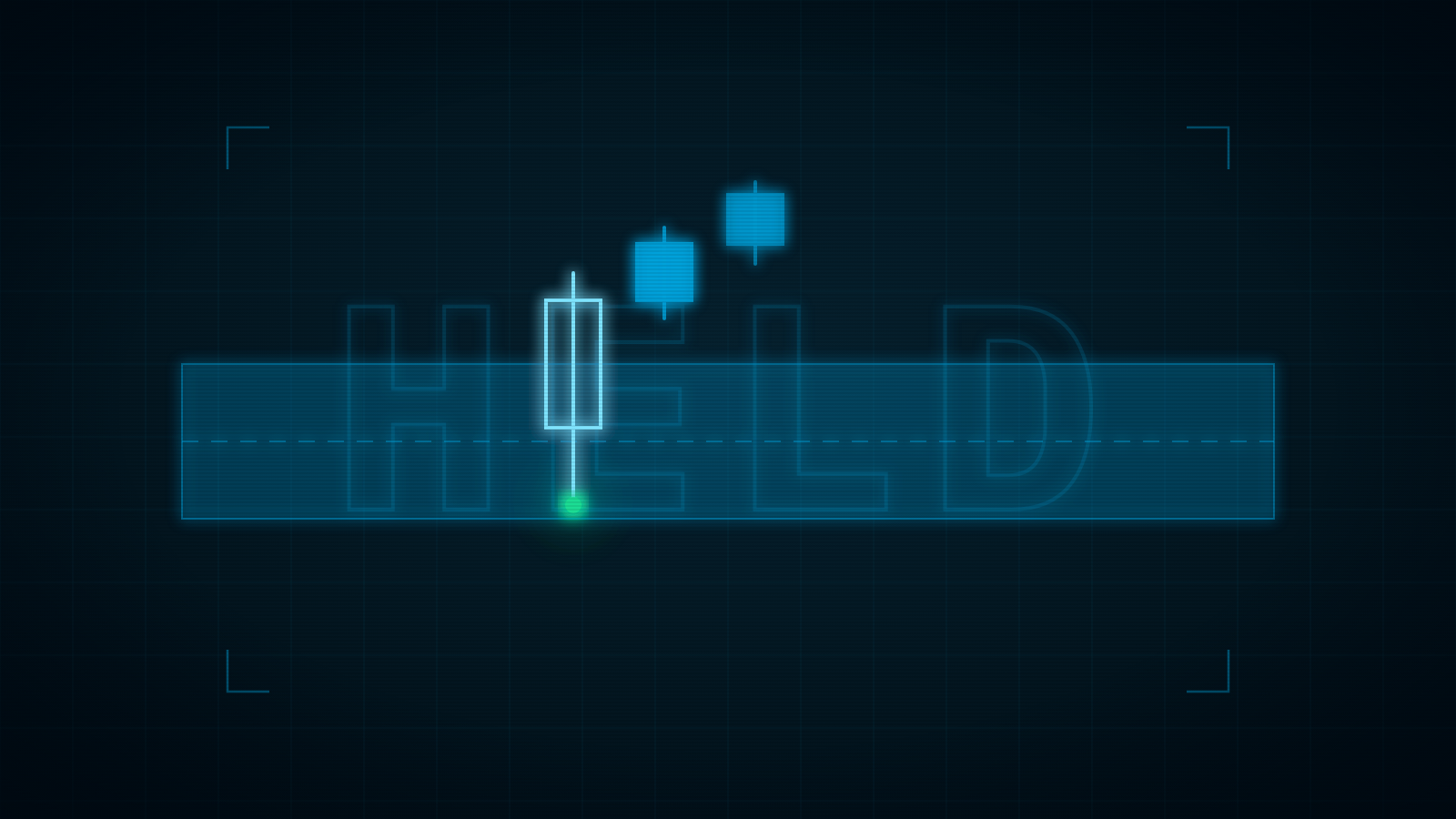
Not all fair value gaps are equal, and the first one of the session is the least equal of all.
The first presented FVG — FPFVG — is the first qualifying imbalance to form after the session open. It carries disproportionate weight for a reason that has nothing to do with the pattern itself and everything to do with timing: it is formed by the first meaningful displacement of the day, in the window where the session’s directional character gets established.
That makes it a reference point the rest of the session gets measured against.
Why the first one matters
The session open resets the field. Overnight positioning gets re-evaluated, size returns, and the first real move away from the opening price is where the day’s initial intent shows up.
The gap that move leaves behind is the record of that intent. It is:
- The first imbalance of the current session’s participants. Overnight gaps were formed in thin conditions by a different population. The first RTH gap is formed in liquidity.
- A reference the whole day gets measured against. Whether price returns to it, how it behaves when it does, and whether it survives — all of that informs the rest of the session.
- A binary decision point. Either it holds and the initial direction has support, or it fails and the opening move was a trap.
That last property is what makes it worth isolating instead of treating it as one gap among many.
The three-condition Held test
“Held” is a specific state, not a vibe. The textbook version requires all three of the following:
- Consequent encroachment is touched. Price retraces into the gap far enough to reach the midpoint. A shallow tag of the proximal edge doesn’t count — the zone has to actually be tested.
- Price returns to the proximal edge, within one tick. After touching CE, price comes back out to the near edge of the gap. This is the rejection. The zone was tested and pushed price back out of it.
- No close past the opposite edge. At no point during the test does a candle close beyond the far edge. A wick through is tolerable. A body close through is not.
All three, in that order. Miss any one and the zone is something other than held.
Held ≠ untouched. Held ≠ unfilled.
A gap price never returned to isn’t held — it’s untested. Held specifically means the zone was tested to its midpoint and rejected price back out without a close through the far side. It’s a survived test, not an avoided one.
The three outcomes
Once the session’s first gap forms, it resolves into one of three states.
- Held. The full three-condition test passes. The zone was tested and defended. The opening direction has demonstrated support at the level where it should have.
- Filled. Price traded through the gap and closed past the far edge. The imbalance was consumed and the premise invalidated. This is not a neutral outcome — a filled FPFVG is directional information in the opposite direction, and the zone becomes an inversion reference.
- Untested. Price never came back. The day ran away from the open. Common on strong trend days, and it means the FPFVG simply isn’t the day’s reference — you’re looking at continuation structure instead.
Each of these is useful. The mistake is only tracking the first one.
A filled first-presented gap isn’t a failed setup. It’s a completed one, pointing the other way.
What “held rate” actually measures
If you track these outcomes over time, two percentages fall out:
- Filled % — how often the session’s first gap gets closed through. This is an invalidation rate.
- Held % — how often the full three-condition test passes. This is the rate at which the textbook play completes.
Those are descriptive statistics about market behavior in your instrument, on your sessions, over your sample. They are not a win rate. A held zone doesn’t mean a profitable trade — execution, sizing, and target selection all sit between the zone holding and the outcome in your account.
What they’re good for is calibration. If you know that on your instrument the first gap gets filled more often than it holds, you’ll size and target the held case differently than someone assuming it’s the base case. That’s the entire value: your assumptions get replaced by your own recorded sample.
Using it in a session
The practical sequence:
- Before the open, know where the untouched liquidity sits on both sides. The FPFVG doesn’t tell you direction on its own; it tells you whether the direction the session opened with is being defended.
- At the open, wait. The first candle is not the first presented gap. Let displacement actually occur.
- When the gap forms, mark it and mark its CE. Don’t act on formation — the gap is a reference, not a trigger.
- On the return, watch the three conditions. The moment of information is the reaction at CE and whether price gets pushed back to the proximal edge.
- On a close through the far edge, flip the read. The zone is now an inversion reference and the opening direction is in question.
The discipline is in the waiting. Most of the value is in the fact that this test resolves early in the session, which means you know something structural about the day before the majority of it has happened.
Where SweepLogic fits
First Presented FVG isolates the session’s first qualifying gap, marks consequent encroachment, and evaluates the three-condition Held test automatically — including the one-tick proximal-edge return and the no-close-past-opposite-edge condition, which are tedious to watch by hand in real time. It records Filled % and Held % across your own sessions and instruments. We don’t publish those numbers; the indicator records yours. Pairs with FVG Pro+ for the broader gap picture and inversion tracking, and ICT Macros for the session-open windows the first gap tends to form in.
——
Educational content only. Nothing here is financial advice or a recommendation to trade. Futures trading involves substantial risk of loss and is not suitable for every investor. Past market behavior does not indicate future results. SweepLogic products are analytical tools; they do not predict market direction and do not produce trading results on their own.
- FROM THE SUITE
First Presented FVG
Session FPFVG detection, textbook held/fill validation, and a live Held% / Filled% stats panel