

Order Blocks: How to Tell Which Ones Matter (NinjaTrader 8)
No indicator is right for everyone — it depends on what you trade and what you already know how to read. But the ones worth keeping share a short list of properties, and the ones you uninstall tend to fail in the same four places. Here’s the checklist, category by category.

By SWEEPLOGIC
- November 2, 2026
- 5 Min Read
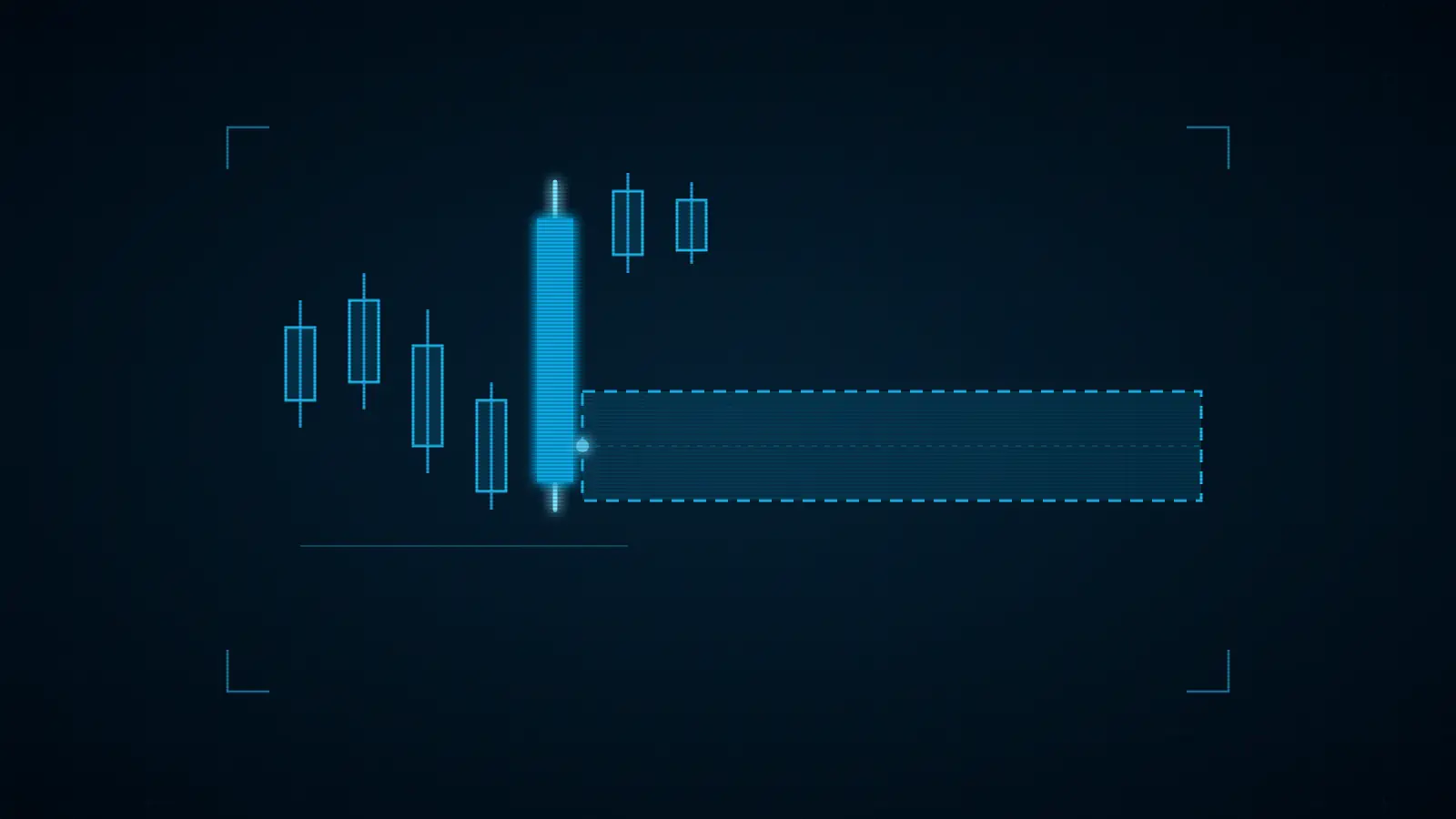
An order block matters when it formed with displacement, left a break of structure behind it, and has not been traded through since.
Any chart is full of candles that look like order blocks. A down candle before an up move, an up candle before a drop. If you mark all of them, you get a cluttered screen and no edge. The skill is filtering, not finding.
This guide covers what an order block is in mechanical terms, the four tests that separate a decisive block from noise, and how to handle a block once it qualifies. It applies whether you mark them by hand or use an indicator on NinjaTrader 8.
What an order block is
An order block is the last opposing candle before a strong move. The theory is that large participants were positioning in that area, so price may return to it later to fill more size. That is a tendency to study, not a guarantee.
- Bullish order block. The last down candle before a strong move up. The zone runs from its high to its low (or its body, depending on your rules).
- Bearish order block. The last up candle before a strong move down.
- Mean threshold. The 50% level of the block. Many traders watch whether price respects it or closes through it.
Why most order blocks do not matter
On a one-minute futures chart, a reversal candle appears every few minutes. If every one counted as an order block, price would be inside a zone at all times and every zone would “work” in hindsight.
The candle itself is the least important part. What matters is what happened after it. A real block is defined by the move it launched, so the move is what you test.
Four tests for a block that counts
- Displacement. The move away from the candle must be fast and one-sided: large-bodied candles, small wicks against the move, and often a fair value gap left behind. A slow drift away from a candle is not displacement.
- Structure. The move should break a swing high or swing low. A block that launched a move which broke nothing is only a pause. A block that launched a break of structure shows that real orders sat there.
- Location. Look at where the block formed. One that sits right after a sweep of obvious liquidity, such as a prior high or low, carries more context than one in the middle of a range. See Draw on Liquidity for how to read those levels.
- Freshness. A block that price has already traded through is spent. If price closed beyond the far edge, treat the zone as failed. If it has been tapped several times, it is weaker each time.
A block that fails any one of these deserves less attention. A block that passes all four is worth putting on your plan before the session opens.
Add time and higher timeframes
Two more filters sit on top of the four tests.
- Time of day. A block that forms inside your killzone is more relevant than one at 12:15. See Time Is a Filter: Killzones and Macro Windows.
- Timeframe. Find blocks on a higher timeframe first, then watch how price behaves at them on your execution chart. A 15-minute block that price returns to tells you more than a 1-minute one.
What to do with a qualified block
A block is a zone to watch, not an entry signal. Decide the rules before price arrives.
- Mark the zone and the mean threshold before the session, with the direction you expect price to react.
- Wait for a reaction. Price entering the zone is not confirmation. Look for a lower-timeframe shift away from it.
- Place the stop beyond the zone. If the block is wrong, a close through the far edge is your answer.
- Size from the stop. The stop distance sets the contract count, not the other way round. See How to Use Chart Trader in NinjaTrader 8.
Order blocks and fair value gaps often overlap, since displacement tends to leave a gap behind. When both mark the same area, you have two reasons to watch it. The fair value gap indicator guide covers the gap side.
Quick answers
What is an order block?
The last opposing candle before a strong, structure-breaking move. It marks an area where price may return.
How do I know if an order block is valid?
Check for displacement, a break of structure, sensible location and freshness. If price has closed through it, it is no longer valid.
Do order blocks work every time?
No. They are zones where price may react. Some fail, which is why the stop goes beyond the zone.
What is the difference between an order block and a fair value gap?
An order block is a candle zone. A fair value gap is a three-candle imbalance. They often appear together after displacement.
Where the Order Blocks indicator fits
Order Blocks is SweepLogic’s native NinjaTrader 8 indicator for this job. It identifies order blocks from swing structure and displacement, scores each zone by strength and draws it on your chart. Weak zones are filtered and stronger ones stand out, so you are not looking at every candle that resembles a block.
If you want a free place to start, the First Presented FVG marks one gap per session at no cost. For the full range, see the SweepLogic tools. Questions? Ask in the SweepLogic Discord or contact support.
Educational and technical content only. Nothing here is financial advice. SweepLogic is not affiliated with NinjaTrader; NinjaTrader and NinjaScript are trademarks of their respective owner. Futures trading involves substantial risk of loss and is not suitable for every investor.
- FROM THE SUITE
Order Blocks
Not every order block matters. This indicator shows you the ones that do.